Guide 01
Planning a bathroom without losing six weeks to it.
A bathroom is six trades' worth of work squeezed into the smallest room in the house, in an order that cannot be changed. Here is that order, what decides the programme, and the handful of decisions worth making before anybody quotes — whether we end up doing the work or not.
The six stages, in the order they have to happen
Nothing here is specific to one firm — this is simply how a bathroom goes in. Knowing it makes it much easier to tell a thorough quote from an optimistic one.
Survey and decisions — before anything is ordered
The survey is where a bathroom is won or lost. What is the incoming mains pressure and flow, because that decides whether the shower you have your eye on will work at all. Where do the existing soil and waste runs go, because moving a WC more than a metre or so is a very different job from swapping one. Is the floor timber or solid, and will it take a stone tile. Is there an extractor, and does it vent outside or into a loft where it will do damage. Get those answered first and the rest of the job is logistics.
Strip out
Old suite, old tiles, old flooring out; anything rotten, damp or previously bodged comes to light here. This is the stage where a fixed price can genuinely change, and an honest fitter tells you what has been found and what it costs before carrying on rather than after.
First fix — pipework and electrics
Hot, cold and waste run to exactly where the new suite and shower will sit, the shower valve is set at the right depth for the finished tile face, and any heating alteration — a towel radiator, a moved radiator, an underfloor loop — goes in now. Cables for lighting, shaver points and the extractor are run at the same time. Everything at this stage is about to be buried, so it is the part worth being fussy about.
Boarding and waterproofing
Walls made flat and sound, and the wet areas tanked — a proper waterproof membrane behind the tiles in the shower and around the bath. Tiles and grout are not waterproof; the membrane behind them is. Skipping this is the single most common reason a three-year-old bathroom starts staining the ceiling below.
Tiling
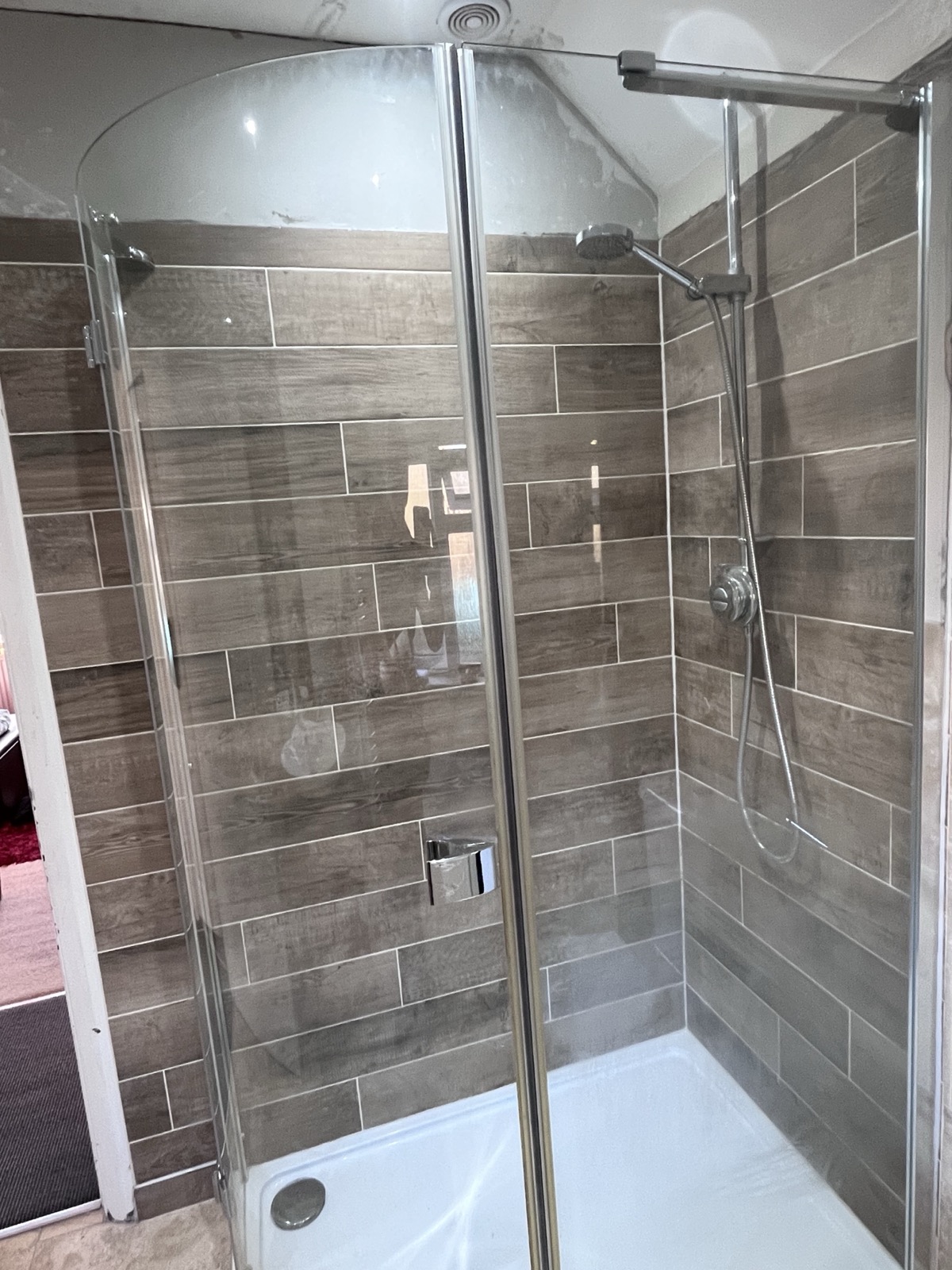
The stage that sets the programme. Tiling in-house rather than handing it to a separate trade is the difference between a two-week bathroom and a five-week one, because a tiler with their own diary will not simply appear on the Tuesday you need them. Layout is planned so that cuts land where they are least visible, the shower valve and niche sit on whole tiles where possible, and the falls in a wet area go where the water is meant to go.
Second fix and commissioning
Sanitaryware, taps, shower, screen, towel radiator, lighting and extractor all fitted and connected. Everything is run, checked for leaks under pressure, and the silicone goes in last so it is not disturbed. Then you get shown how it works — the shower controls, the radiator valve, the isolating valves and where the stopcock is, which is the thing everybody wishes they had asked.
Tiles
Porcelain, ceramic or natural stone — and why it is a fitting decision, not a shopping one.
Porcelain
Dense, low-porosity and hard-wearing, which is why most modern bathrooms use it. Large-format porcelain gives you fewer grout lines and a calmer-looking room, but it needs a flat substrate and a fitter willing to do the preparation rather than build the wall out of adhesive.
Ceramic
Lighter, easier to cut and usually cheaper. Excellent on walls, less suited to floors that take a beating. Metro and brick-bond formats are ceramic more often than not, and they are forgiving in older houses where nothing is quite square.
Natural stone
Marble, limestone, slate and travertine look like nothing else and behave like nothing else: they are porous, they need sealing before and after grouting, and they want the right adhesive. Beautiful, but it is a specification decision rather than a shopping decision, so raise it at the survey.
Avoidable
Six mistakes that cost real money
- 1
Buying the shower before anyone has measured the water pressure and flow. A rainfall head on a poor supply is a disappointment you have paid a premium for.
- 2
Moving the WC across the room without checking where the soil stack is. Sometimes it is easy. Sometimes it means lifting the floor in the room next door.
- 3
Assuming the tiler is included. In a lot of quotes they are not, and the bathroom sits half-finished while you find one.
- 4
Skipping the tanking to save a couple of hundred pounds on a job that will cost thousands to put right.
- 5
Choosing an extractor that vents into the loft. That is somebody else’s damp problem in two winters’ time — usually yours.
- 6
Leaving the heating out of the conversation. A towel rail is not a radiator; if it is the only heat in the room, the room will be cold in January.
Want the survey conversation, not a sales one?
Quotes are free, and they come after somebody has looked at the pressure, the waste runs and the floor. The tiling is done by the same firm, so the programme is one programme.